
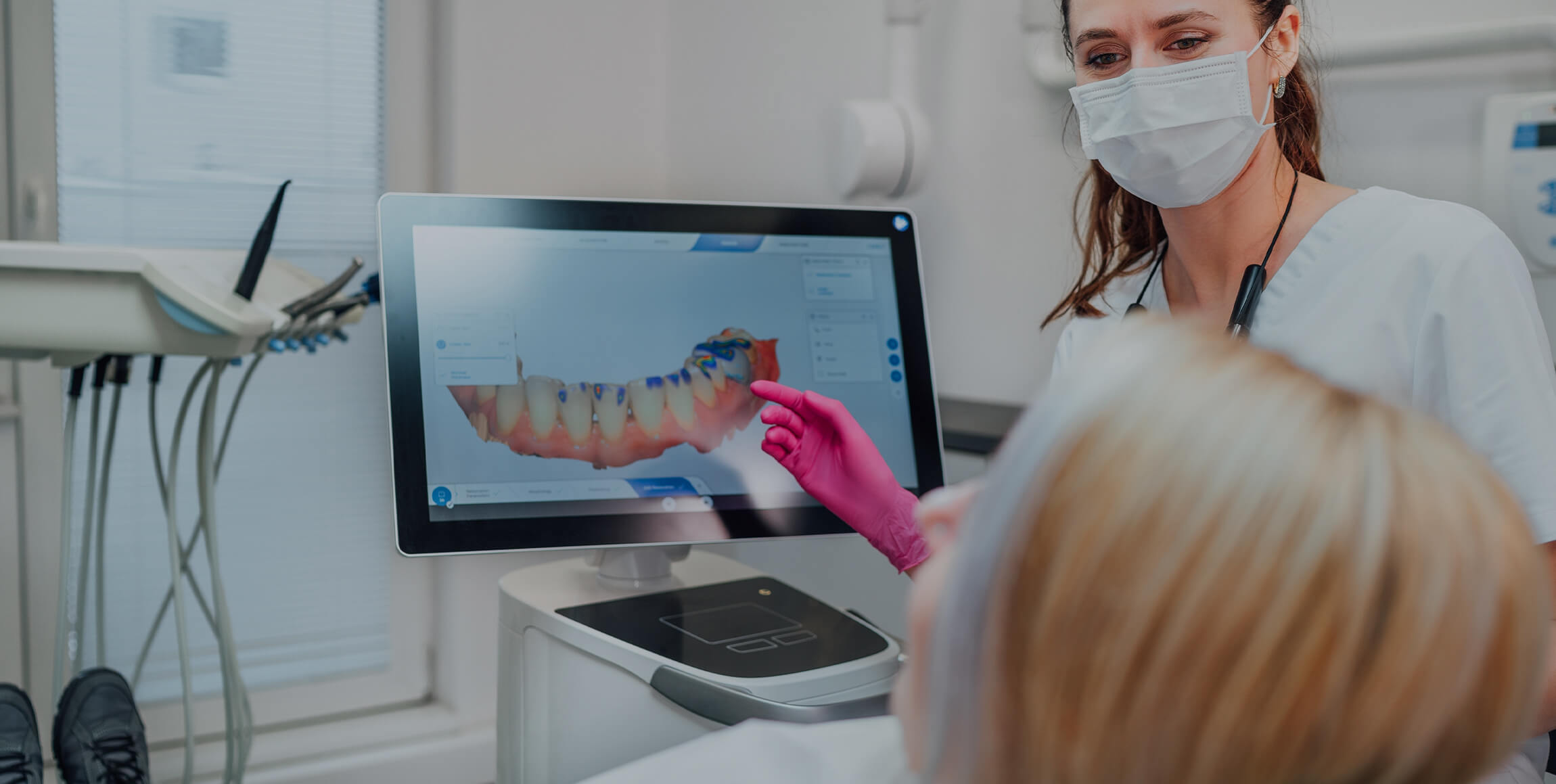
You have probably wanted straighter teeth for years, and somewhere along the way you looked at the price and quietly closed the tab. Here is the good news about the question you are really asking: with Invisalign you get to see the answer before you agree to anything, because the plan shows your own teeth moving to their finished position on screen, with the price beside it.
Is Invisalign worth it?
For the right person, yes, and it is easy to tell whether that person is you. It is worth it when you want straighter teeth, will wear the aligners twenty to twenty-two hours a day, and need the kind of movement aligners do well.
That last part covers more smiles than people expect. Crowded front teeth, gaps between teeth, crooked or twisted teeth that show when you smile, teeth that have drifted since the brace you wore as a teenager, and mild to moderate bite problems where the trouble is in the teeth rather than the jaw: all of that is aligner work. You see, aligners move teeth. They do not change the jaws the teeth sit in, and that one fact sorts almost everyone.
Now, the honest other side, in the practice’s own words. Invisalign is not for jaws that meet wrongly, because when the problem is the size or position of the jaw itself, aligners cannot correct it, and “that is a referral, not a plan.” Very large rotations or tooth movements are better done with a fixed brace, and the Invisalign vs braces comparison goes through that choice properly. Gums or teeth that need treating come first, since gum disease and decay are sorted before any tooth is moved. And it is not for anyone who will not wear them. If that is you, the page says it plainly: “say so, and a fixed brace is the honest answer.”
So which list are you on? That is exactly what the scan at the consultation tells you.
What does the money actually buy?
This is where “worth it” really gets decided, because a price is only high or low against what sits inside it.
At Designer Smiles, every Invisalign plan includes free tooth whitening and a free set of removable retainers. So the retainers that keep your new smile in place and the whitening that brightens it are already inside the figure.
The plans themselves are priced by how far your teeth have to move. Invisalign Express is from £999, seven aligners for minor movements or teeth that have drifted a little since a brace. Most smiles fall into one of four plans: Invisalign Lite at £2,195, Moderate at £2,495, Comprehensive at £2,895 and Complex at £3,295.
Why do they differ? Think of a staircase. Each aligner is one step, a fraction different from the last, and teeth with further to travel need more steps. The scan counts the steps your case needs, and the number of aligners sets the price. Why Invisalign prices vary so much from one practice to the next is a story of its own, and a lot of it comes back to that same count.
And since “from” on its own tells you very little, here is what pins your figure down: the price for your own case is on the plan you see at the consultation, before you decide. If you would rather spread it, 0% finance through Tabeo over up to twelve months is available, arranged at the consultation once your price is known. The Invisalign page sets out every plan, who it is for and what comes with it.
What are the honest downsides?
There are a few, none of them secret, and each has a reason that is usually the treatment doing its job.
The big one is wear time. Aligners go in for twenty to twenty-two hours a day, because they only move your teeth while they are in. An aligner sitting in its case is a tool left on the shelf.
Then there is eating. The aligners come out to eat and to drink anything other than water, and you brush, or at least rinse, before they go straight back in. Why the fuss? Food and hot or coloured drinks stain and warp the plastic, and an aligner that has warped no longer fits the way it was made to.
Each new set feels tight for a day or two. That is the pressure that moves the teeth, so a snug new aligner is a sign of progress, and it eases as the teeth settle. If the feel of it is the thing that worries you most, whether Invisalign hurts is answered on its own page.
Most people lisp slightly for the first few days. Your tongue knows the backs of your teeth well and has to learn the thin new layer, and then you stop noticing the aligners at all.
And afterwards come retainers at night, for good. Teeth drift back over the years after any straightening, so a retainer worn at night holds them where the plan put them. That is why a set is included with every plan here; a replacement set later is £150 per arch.
What makes Invisalign work, or stall?
Mostly one number, and it is the one you hold. The Invisalign page puts it without any softening: “under twenty hours a day the plan runs late or stalls.”
Aligners are a bit like a seatbelt. They do their whole job while they are on, and nothing at all while they are off. That is good news, really, because it puts the biggest thing deciding your result in your own hands.
Well, the rest is settled before you start. The consultation is a 3D scan of your face and teeth, x-rays and a full dental health check, so your dentist can tell you whether aligners will do what you want before anything is fitted. Then you come in at intervals so the movement is checked against the plan, which means a tooth that is lagging gets noticed while it is still a small thing. At Designer Smiles, the Invisalign cases are planned from the 3D scans taken in the practice, and patients’ Google reviews name Dr Aadam Binamin (GDC 265535) for their treatment.
How many months yours takes depends on the same things, and how long Invisalign takes goes through them case by case.
Could composite bonding do the job instead?
Sometimes, yes, and it is worth knowing before you choose, because the two do different jobs. Aligners move the teeth. Composite bonding reshapes them with tooth-coloured resin so they look straighter without moving at all, in one visit.
| Invisalign | Composite bonding | |
|---|---|---|
| What happens | Clear aligners move the teeth a little at a time | Resin reshapes the teeth so they look straight; nothing moves |
| How long | Four months to a year or more | One visit |
| Price here | Express from £999; plans £2,195 to £3,295 | £200 – £250 a tooth |
| Best for | Crowding, gaps, crooked front teeth, mild to moderate bites | Slight twists, uneven edges, one or two teeth |
So the question to ask is where the trouble lives. If it is one or two teeth with a slight twist or an uneven edge, bonding can make them look straight in a single visit, with no drilling and usually no injection, and you see a trial smile on your own teeth first. If your teeth are crowded or gappy, that is a question of where the teeth stand, and resin added to a tooth in the wrong place leaves it in the wrong place, only bigger. That is aligner work.
And many smiles use both. Invisalign moves the teeth first, then bonding finishes worn edges once the teeth are straight, at £200 – £250 a tooth on the current offer (usually £400). The order matters because bonding is shaped to a tooth where it stands; do it first and the aligners carry that careful shape off to a new spot. The 3D plan shows the combination before you commit to either.
Why not a cheaper aligner kit by post?
It is a fair question, and the Invisalign page answers it in one line: “The plastic is similar; the dentistry is not.”
The difference is the part you cannot see in the box. Here a dentist examines your teeth and gums and takes x-rays before anything moves, plans the case from a scan of your own teeth, fits attachments where the aligners need grip, checks the movement at intervals and fixes problems in the chair. Remote-only kits skip the examination and the reviews, and that is what most of the price difference buys. So you are choosing between plastic on its own and plastic with a dentist looking after it.
What do people who have had it done say?
The most useful answer to “is it worth it” comes from people who have just been through it. Claire Cripps, reviewing her treatment here, wrote: “I am so glad I did it and wish I had done it years ago.” Adam Khan wrote that his “treatment took around 20 weeks and everything was really nice, easy and smooth from start to finish.” And Delaram Samie, who had “checked so many clinics around the UK”, put it this way: “For the quality of treatment and the result I received, the value was honestly incredible.”
“Wish I had done it years ago.” If you have been thinking about this for years yourself, that is probably the line that lands. Cases straightened at this practice are in the gallery, photographed the same way before and after.
So, is Invisalign worth it for you?
If your teeth are crowded, gappy or a little crooked, and you will wear the aligners, then yes, and you do not have to take anyone’s word for it. The consultation is free, held with a refundable deposit, and it starts with a 3D scan of your face and teeth. It ends with your own teeth moving to their finished position on screen, with the price for your case beside them, before you agree to anything. The whitening and the retainers are already inside that price.
Designer Smiles is at 4 Manor Square in Solihull. Ring 0121 709 3821, tell us what has been bothering you all these years, and we will show you what it looks like straight.

